Sunday, November 27, 2011

ISO bracketing with the Olympus Pen


John Neel has an interesting piece on Pixiq about using the ISO bracketing feature in the Olympus Pen cameras. I'm using an E-PL2 and learning something new almost every time it's in my hands.

Neel pointed out that unlike many other digital cameras, the Pen can take a single RAW image, then automatically make three JPEGs with as much as 1 stop of over and under exposure. Assuming the original is properly exposed, the three images can be combined for a high dynamic range photo, or the RAW files can be processed for an even wider exposure latitude. One big advantage is that this process can be used for action shots unlike some other exposure bracketing methods since it relies on a single shot, not consecutive ones.

Now, that Camaro Z28 up above is an HDR image from a single RAW file. Believe me, the car is pretty ratty and the photo makes it look better than it is. I made one JPEG that was 3 stops over exposed in order to get some shadow detail. The under exposure was just one stop. I tried to keep it looking natural rather than cartoonish.


This is a DC-10 that's being stripped at Tulsa International. I worked on DC-10 avionics for years but never managed to ride on one. Chances are I never will. This image is cartoonish, and shows what happens when being overly-enthusiastic while playing with the HDR sliders. Still, I like it for the stark look of an airliner on its way to the graveyard.

I haven't forgotten my old rangefinder cameras, though I'll admit to using the Olympus Pen almost exclusively for a while. But I just finished running a roll through the Konica Auto S2, and started another one in the Canon Canonet. Also, I was surprised to find there's a roll in the Nikon N6006, so it went back into my camera bag to be used in the following couple of weeks. The Konica photos should be ready tomorrow.

Labels: , , , ,

Monday, July 18, 2011

Rules for editing


Bridge in HDR. Click through to see full size on Flickr.


"There are two rules for editing. The first rule is to edit ruthlessly."

I've always liked that one. It's too easy to get enamored of our words and find that we can't part with a single one of them. I do it all the time. It's probably a carry-over of a bad habit from school where written projects had to be X number of pages. I hated writing in school, so wordiness, redundancy, and other bad things took hold.

I learned another rule from my friend Brian, who edited a local cycling newsletter once upon a time. "If you're going to write for public consumption," he said, "You have to be thick-skinned." Was he ever right! I've learned to be thick-skinned, and dismissive of trolls, tools, and fools. Why waste time and energy on them?

So it was with a sense of wonder that I saw this post on the Digital Photo School site, advising those of us who are (ahem) packrats to delete ruthlessly. Not that I'm a packrat, of course. Not me.

Labels: , , ,

Sunday, July 17, 2011

DeSoto Suburban


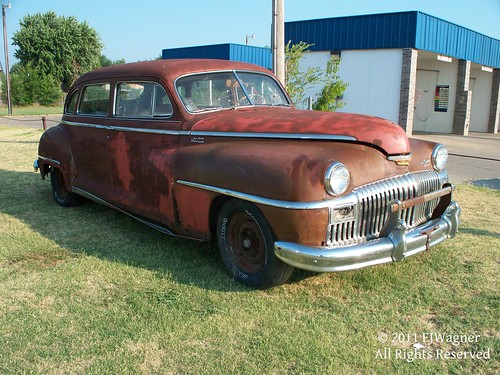
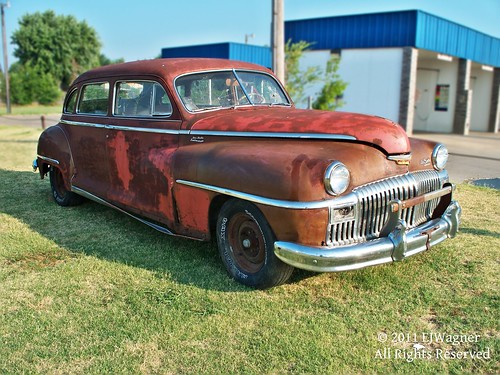
The used car lot has a 'new' old car. This is a Desoto Suburban. It's the forerunner of all those boxy SUVs cluttering up parking lots everywhere. This is a beast of a car. It's gigantic.

I played with the high dynamic range gadget on Zoner Photo Studio this week. The shot above is a normal exposure. The one below is a composite of three exposures: the one above, and two that were under and over exposed by one stop. I like the way it brings out shadow detail.


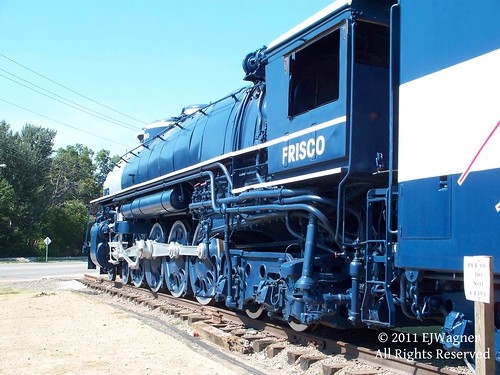
I reshot the locomotive over on the west side, too. I was there about mid morning and the sun was already high. Contrast was high too. This first one is the HDR image.


These two look very similar, but when I set them up in a viewer and switched back and forth between them, it appeared that the HDR image had the sun coming from a lower angle than the 'straight' image. Still, this one appears fairly natural, and in all fairness, the Desoto verges on being cartoonish. But I still like it.

Labels: , ,

Wednesday, June 29, 2011

Guess what I found?


My Kodak Z1285 will do automatic bracketing! Well, maybe you don't get excited about this, but I do. In burst mode, it will take three shots with as much as plus or minus one stop. This means I can tinker with high dynamic range photography in Zoner Photo Studio.

That photo up above in an HDR image. This next one is the 'middle' exposure that it's based on. Click through for the full size photos.


OK, maybe you're not as excited about it as I am, but try to understand the background. Ansel Adams devised the Zone System over 70 years ago. Among other things, it's photography that mimics the way we see. Our eyes and brains put together images that have extreme contrast from light to dark. An object might be in full sunlight in part of our visual field and in deep shade in another, yet we can see all of it. Film and digital cameras don't see that way. They can extract detail from only one part of the field, so if the light parts are properly exposed, the dark parts are lost.

HDR takes multiple images at different exposures and combines them.

Of course, what's a day without some rusty - or formerly rusty - old equipment? This locomotive was quietly decaying in the Owasso rail yard until a group of local enthusiasts bought it and restored it. It's now on display across from Webster School along Old Route 66 (Southwest Boulevard) in Tulsa. And yes, I tinkered with it, but it's not an HDR image. Maybe next time.

I did stumble across a nice old truck, though. This was over-exposed so I played with the image.


I'll have to go back and revisit some of those places armed with new knowledge about getting better images. Oh, and before I forget, there are more over on my Picasa web albums. I uploaded some dance photos from Skiatook, and added to the existing albums for old cars and railroad stuff. I used three cameras: the Nikon N6006, the Kodak Z1285, and the workhorse Yashica Electro 35GT.

Labels: , , ,